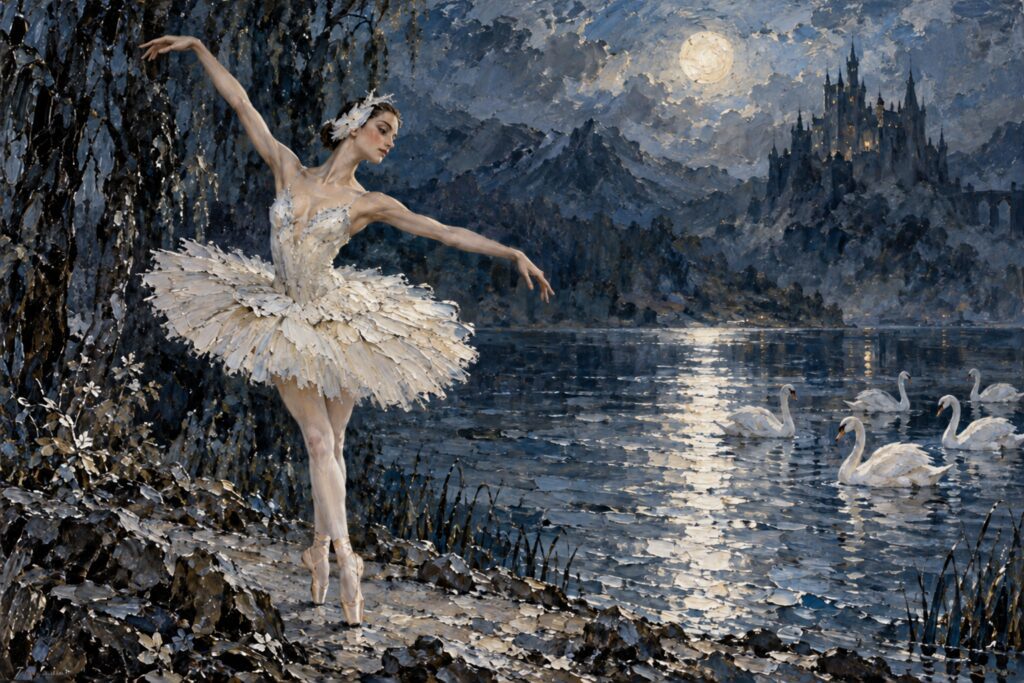

The story
Prince Siegfried encounters Odette, trapped by an enchantment. Rothbart and Odile threaten the promise of love that might release her. The contrast between Odette and Odile gives the central ballerina a double role: the same performer must make two identities legible through movement and dramatic intention.
Why the credits matter
Tchaikovsky’s ballet first reached the stage in Moscow in 1877 with choreography by Julius Reisinger. The 1895 staging by Marius Petipa and Lev Ivanov became a central reference for later productions. Subsequent choreographers have revised the action, musical order and choreography; a production’s individual credits explain which interpretation you are watching.
LookBallet viewing guide
Try watching one entrance with attention only to the arms and upper body, then another with attention to the feet and direction of travel. How does the dancer make a character appear cautious or commanding? In the lakeside scenes, watch the spaces between the swans as carefully as the swans themselves.
Choosing a recording
LookBallet’s English National Ballet in-the-round record identifies the Royal Albert Hall film. Its circular staging and overhead camera views are specific to that production. A company name and ballet title alone are not enough to identify a recording; compare cast, venue and filming details.
Sources and further reading
Sources reviewed: 15 October 2026. Viewing suggestions are LookBallet editorial guidance.
Two ways into Swan Lake
These productions offer two different starting points. Derek Deane designs the classical story for an audience surrounding the stage. Johan Inger reworks the swan-maiden narrative around personal relationships and freedom.
- Swan Lake in-the-round — English National Ballet: follow the ensemble patterns and the relationship between the leading couple and the arena. Streaming availability in Spain remains under review.
- A Swan Lake — Semperoper Ballett: explore a reinterpretation of the story. The My Opera Player title page explicitly lists subscribers in Spain.
LookBallet editorial comparison. Production, recording and territorial availability are separate questions.